

The situation and solutions of various losses in cardboard box factories
Release time:
2024-08-16 20:20
Source:

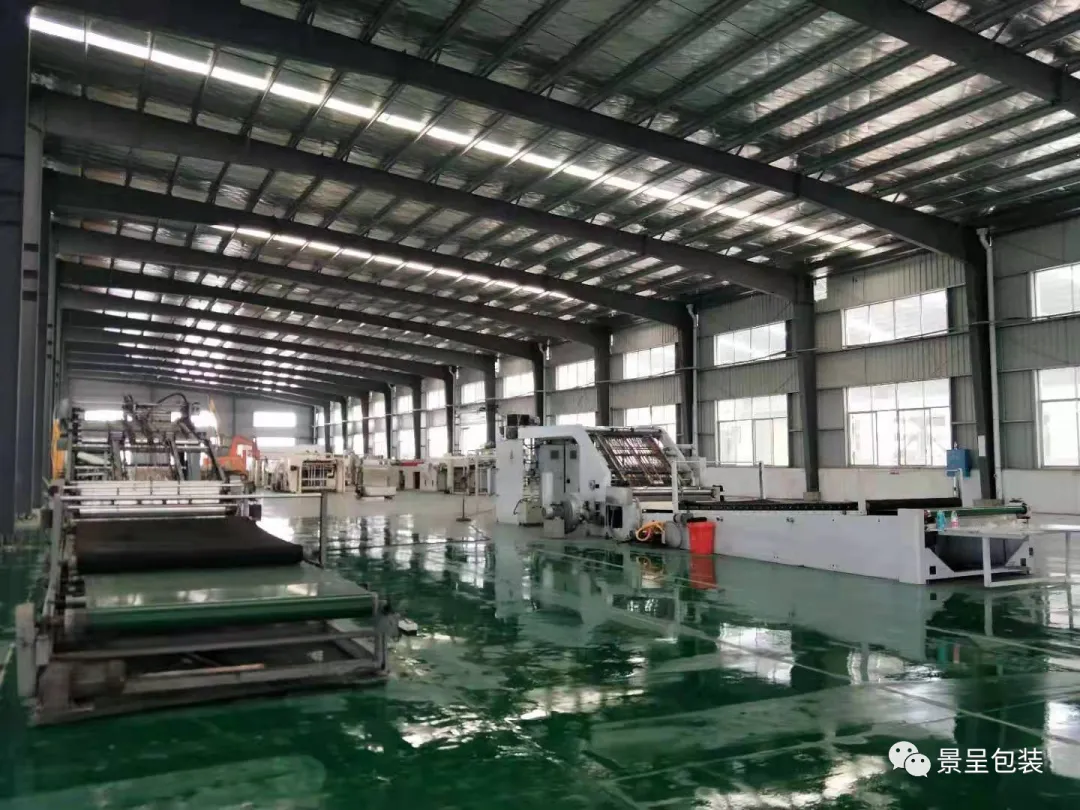
In paper production, various types of losses often occur in machinery and equipment. Today, the editor will take you into the paper box factory and analyze in detail the solutions to the losses in the paper box factory.
The loss of cardboard boxes in enterprises is a major factor affecting costs. If the loss is well controlled, it can greatly increase the efficiency of the enterprise and improve the competitiveness of its products. Below is a brief analysis of various losses in cardboard box factories.
Simply put, the total loss of a cardboard box factory is the amount of raw paper input minus the amount of finished products received. For example, if the monthly raw paper input should produce 1 million square meters and the finished product inventory is 900000 square meters, then the total factory loss for the month=(100-90)=100000 square meters, and the total loss rate is 10/100 × 100% -10%. This total loss can only be a very general number. But allocating losses to each process will be clearer and easier for us to find ways and breakthroughs to reduce losses.
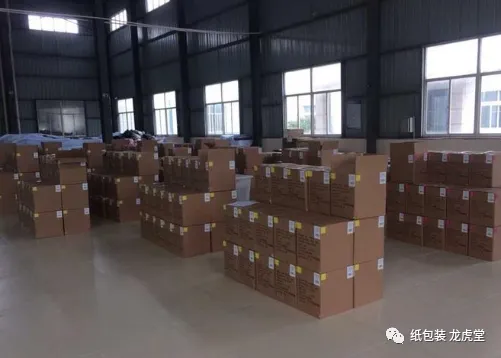
Corrugated machine cardboard loss
1. Defective product loss: Defective products refer to non-conforming products that have been cut by a cutting machine.
Formula definition: Loss area=(cutting width x cutting number) x cutting length x number of defective products. Causes: improper operation by personnel, quality problems with the raw paper, poor adhesion, etc.
Improvement measures: Strengthen the management of operators and control the quality of raw paper.
2. Super product loss: Super products refer to qualified products that exceed the predetermined paper feed quantity. For example, if 100 sheets of paper are ordered and 105 sheets of qualified paper are produced, then 5 of them are defective.
Formula definition: Super product loss area=(cutting width x cutting number) x cutting length x (number of defective cutting blades - number of scheduled cutting blades) Causes: excessive amount of paper on the corrugated machine, inaccurate paper connection on the corrugated machine, etc.
Improvement measures: The use of a corrugated machine production management system can solve problems such as inaccurate paper quantity and paper connection on a single tile machine. 3. Edge trimming loss: Edge trimming refers to the part that is removed when the edge trimming and pressing machine of the tile repair machine is used to trim the edge.
Formula definition: Edge trimming loss area=(paper web - trimming width x number of cuts) x cutting length x (number of good product cuts+number of defective product cuts) Cause: Normal loss, but if it is too large, the cause should be analyzed. For example, if the order requires a paper web with a trimming width of 981mm, and the corrugated machine requires a minimum trimming width of 20mm, then 981mm+20mm=1001 mm, which is exactly larger than 1000mm of paper web. If only 1050mm paper is used for trimming, the trimming width will be 1050mm-981mm=69mm, which is much larger than normal trimming, resulting in an increase in trimming loss area.
Improvement measures: If it is due to the above reasons, it can be considered to not trim the edges of such orders, use 1000mm paper to run, and roll it off together during the later printing and box making process. This can save 50mm width of paper, but it will reduce printing efficiency to a certain extent. Another strategy is for the sales department to take this into consideration when accepting orders, improve the order structure, and optimize the orders. 4. Jumping loss: Jumping refers to the portion generated when a wider paper web is needed to feed the paper due to a shortage of basic paper web. For example, the order should be made on 1000mm paper, but due to a lack of 1000mm base paper or other reasons, 1050mm paper needs to be used, and the extra 50mm is considered a skip grid.
Formula definition: Jumping loss area=(jumping paper web - scheduling paper web) × cutting length × (number of good product cutting blades+number of defective product cutting blades)
Reason for occurrence: Unreasonable preparation of raw paper or untimely purchase of raw paper by the sales department.
Improvement measures: The company's procurement should review whether the raw paper procurement and stock preparation meet the customer's needs, and try to cooperate with the customer's paper preparation as much as possible to achieve the T-mode work concept. On the other hand, the sales department must issue a material demand order in advance, giving the purchasing department a procurement cycle to ensure that the raw paper is accurately in place. The loss of defective products and defective products should be considered as performance losses in the corrugated cardboard production department and can be used as assessment indicators to promote improvement.
Losses cannot be eliminated, what we can do is to minimize and minimize them through various methods and techniques as much as possible. Therefore, the significance of subdividing losses earlier is to let each relevant process understand whether various losses are reasonable, whether there is still room for improvement, and what needs to be improved (for example, if the loss of super products is too large, it may be necessary to review whether the paper connection of the corrugated machine is accurate, if the jump loss is too large, it may be necessary to review whether the raw paper preparation is reasonable, etc.), in order to achieve the goal of controlling and reducing losses, reducing costs, and improving product competitiveness. Based on various losses, assessment indicators can be formulated for each department, rewarding good and punishing bad, and improving the enthusiasm of operators to reduce losses.
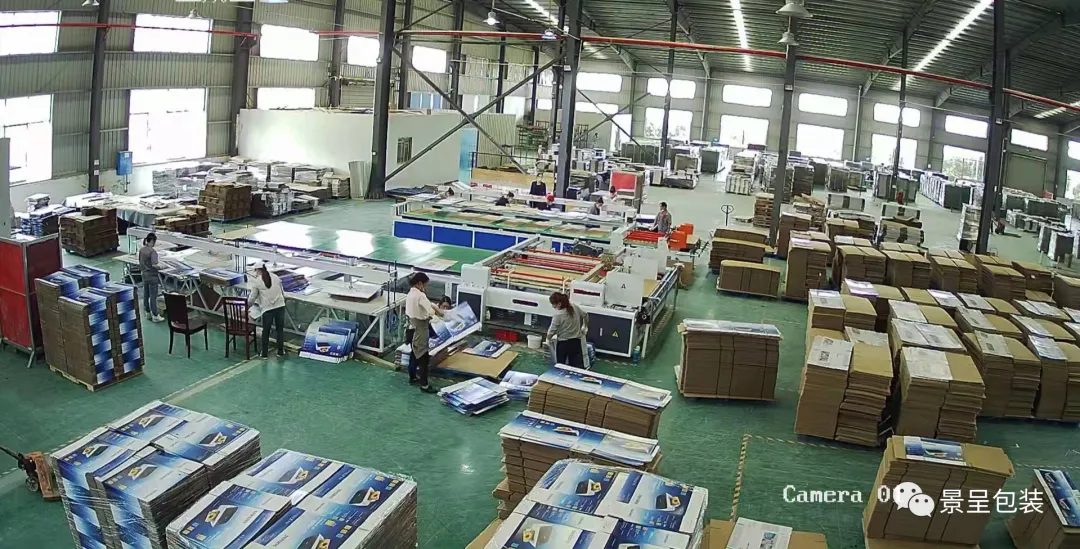
Printing box loss
1. Additive quantity loss: Due to factors such as printing machine testing and accidents during the production of cardboard boxes, a certain amount of additive quantity will inevitably be added to the order scheduling.
Formula definition: Additive quantity loss area=Scheduling additive quantity x Unit area of cardboard box
There are many reasons for this, such as high losses in printing machines, low operational skills of printing machine operators, and high packaging losses in the later stages. In addition, there is no control over the quantity of orders placed by the sales department. In fact, there is no need to add so much extra production, as excessive production can lead to unnecessary overproduction. Overproduction that cannot be digested will become "dead inventory", which is overdue inventory and an unnecessary loss.
Improvement measures: This should belong to the performance loss of the printing and packaging department, which can be used as an assessment indicator for the department to promote the improvement of personnel quality and operational level. The sales department should strengthen the gate in terms of order quantity, and distinguish between complex and simple production quantities. It is recommended to include the quantity in the first article and control it from the source to avoid unnecessary over production or under production.
2. Edge rolling loss: During the production of cardboard boxes, the part around the cardboard that is rolled off by the die-cutting machine is called edge rolling loss.
Formula definition: Edge rolling loss area=(paper preparation area - rolled area) x inventory quantity
Cause: Normal wear and tear, but when the quantity is too large, the cause should be analyzed. There are also fully automatic, manual, and semi-automatic die-cutting machines with different requirements for edge rolling. Therefore, different die-cutting machines must be pre added with corresponding edge rolling to minimize edge rolling losses as much as possible.
3. Full page trimming loss: Some cardboard box users require that the edges should not leak white. To ensure quality, it is necessary to increase the area around the original cardboard box by a certain amount (such as 20mm) to ensure that the rolled cardboard box will not leak white. The 20mm increase is the loss of full board trimming.
Formula definition: Full page trimming loss area=(spare paper area - actual cardboard box area) x warehouse quantity
Cause: Normal wear and tear, but when the quantity is too large, the cause should be analyzed and improved
Through practical experience, it has been proven that under a scientific management model, losses can be controlled. As long as enterprises adopt reasonable solutions, losses will no longer be a permanent "pain" for them.
Solutions to current production issues
1. Loss issue
The issue of loss is currently the most significant problem in production. Excessive loss not only affects the company's costs, but also weakens its overall competitiveness. The following sixteen words succinctly indicate the direction of efforts for each process, namely "full participation, standard operation, emphasis on quality, and reduction of losses".
2. On site IE improvement to eliminate production waste
Wasting homework should not happen, and once discovered, it should be resolved in a timely manner. It mainly includes seven types of waste: surplus, waiting, handling, processing, inventory, handling, and defective products.
To eliminate waste, the first step is to adopt a "change from me, improve from me" attitude. Each process should start from its own reality, abandon conservative concepts, deny negative phenomena, ask "why" for the reasons for negative phenomena, and be clear that "improvement is infinite". Do not be complacent with small achievements.
3. LEAN production method
(1) Meaning: The literal meaning of the word is thin, bone without fat, which means there is no waste and the most suitable production method. The previous production method allowed for a small amount of defects and a certain amount of safety stock, but the LEAN production method does not accept defects or inventory, and eliminates all businesses without added value.
(2) The necessity mainly includes improvements in the following three aspects:
① Improvement of management system;
② Improvement of production environment;
③ Consumers demand diversified quality.
(3) Characteristics of LEAN production method:
① Value employees' personal abilities;
② Emphasize SPEED (speed);
③ Strict quality management;
④ ZERO waste (eliminate waste).
Previous Page
Next Page

Dedicated to provide customers with quality products and timely and thoughtful service
Focus on us
Contact Information
Sales Hotline:18217277847
E-mail:Twinklehu@jingchengpackaging.com
Enterprise address: Yungang Road, Xingang District, Chenglingji, Hunan, Yueyang City
Copyright©2023 Hunan Jinginto Packaging Co., Ltd.
This website already supports ipv4 ipv6 two-way access